
C57BL/6JNifdc-Cd300ldtm1(CD300LD)Bcgen/Bcgen • 113131
| Product name | B-hCD300LD mice |
|---|---|
| Catalog number | 113131 |
| Strain name | C57BL/6JNifdc-Cd300ldtm1(CD300LD)Bcgen/Bcgen |
| Strain background | C57BL/6JNifdc |
| NCBI gene ID | 100131439 (Human) |
| Aliases | CLM-4; CLM-5; CD300D; CMRF35A4; CMRF35-A4 |


Gene targeting strategy for B-hCD300LD mice

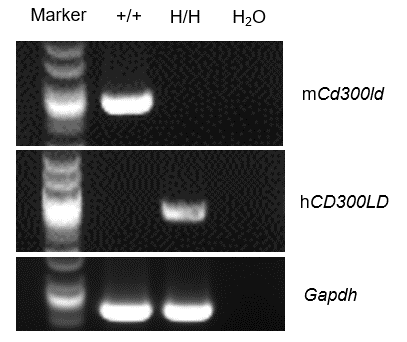
Strain specific analysis of CD300LD mRNA expression in wild-type C57BL/6JNifdc mice and B-hCD300LD mice by RT-PCR. Spleen RNA were isolated from wild-type C57BL/6JNifdc mice (+/+) and B-hCD300LD mice (H/H), then cDNA libraries were synthesized by reverse transcription, followed by PCR with mouse or human CD300LD primers. Mouse Cd300ld mRNA was detectable in wild-type mice. Human CD300LD mRNA was exclusively detectable in B-hCD300LD mice but not in wild-type mice.
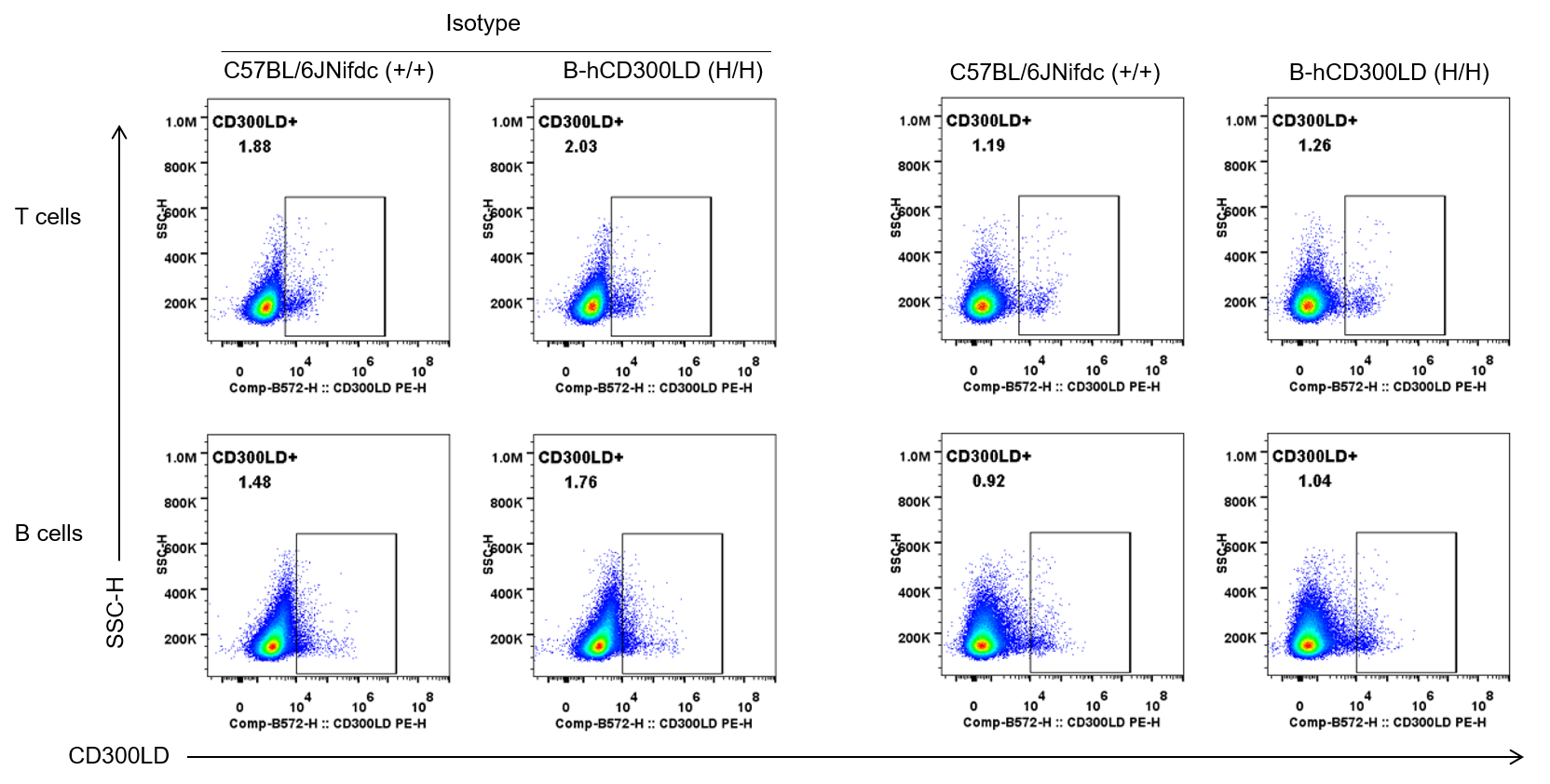
CD300LD expression analysis in homozygous B-hCD300LD mice by flow cytometry. Splenocytes were collected from wild-type C57BL/6JNifdc mice (+/+), homozygous B-hCD300LD mice (H/H), and analyzed by flow cytometry with CD300LD antibody(provided by a client, cross-reactive between human and mouse ).
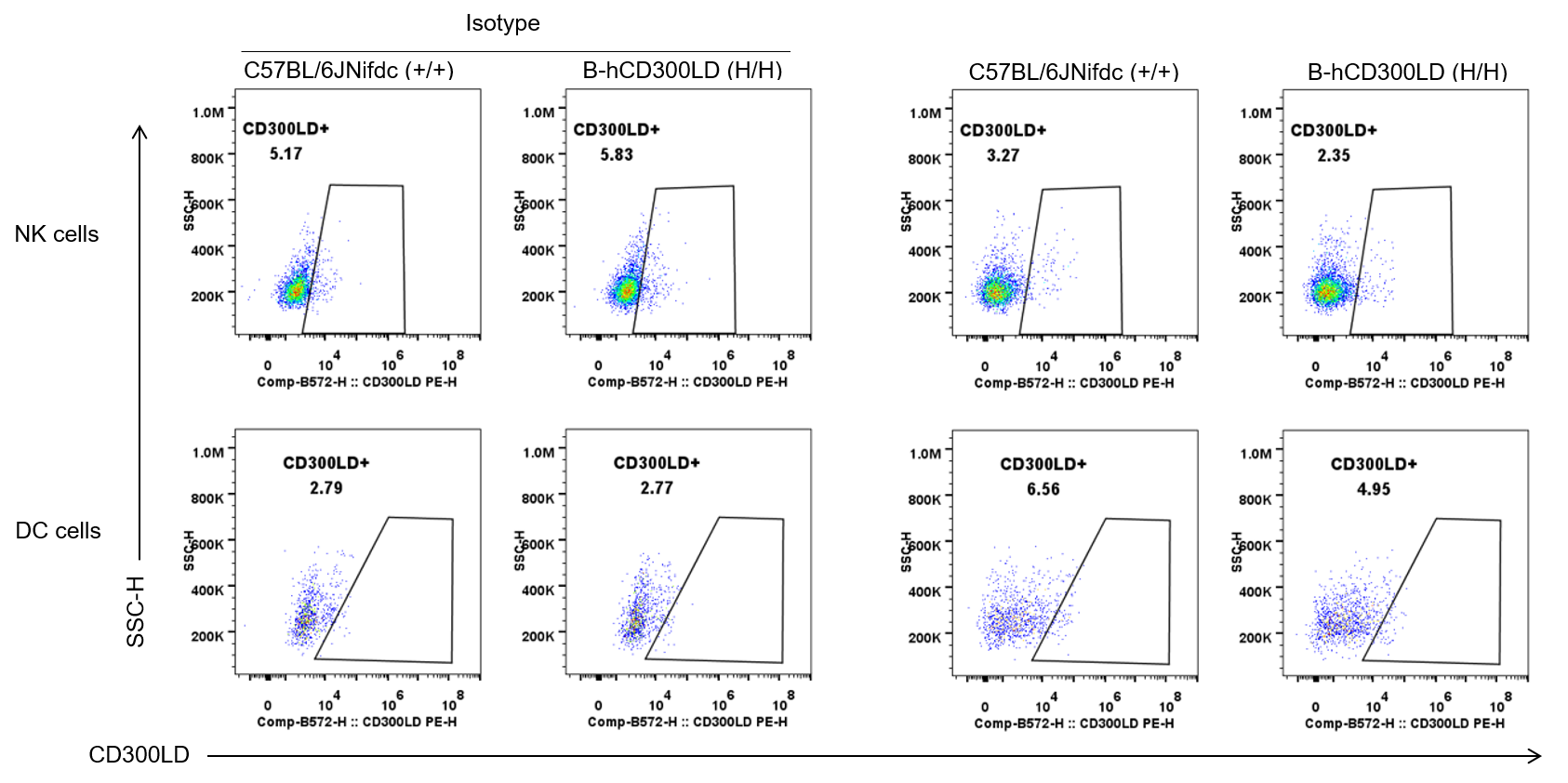
CD300LD expression analysis in homozygous B-hCD300LD mice by flow cytometry. Splenocytes were collected from wild-type C57BL/6JNifdc mice (+/+), homozygous B-hCD300LD mice (H/H), and analyzed by flow cytometry with CD300LD antibody(provided by a client, cross-reactive between human and mouse ).
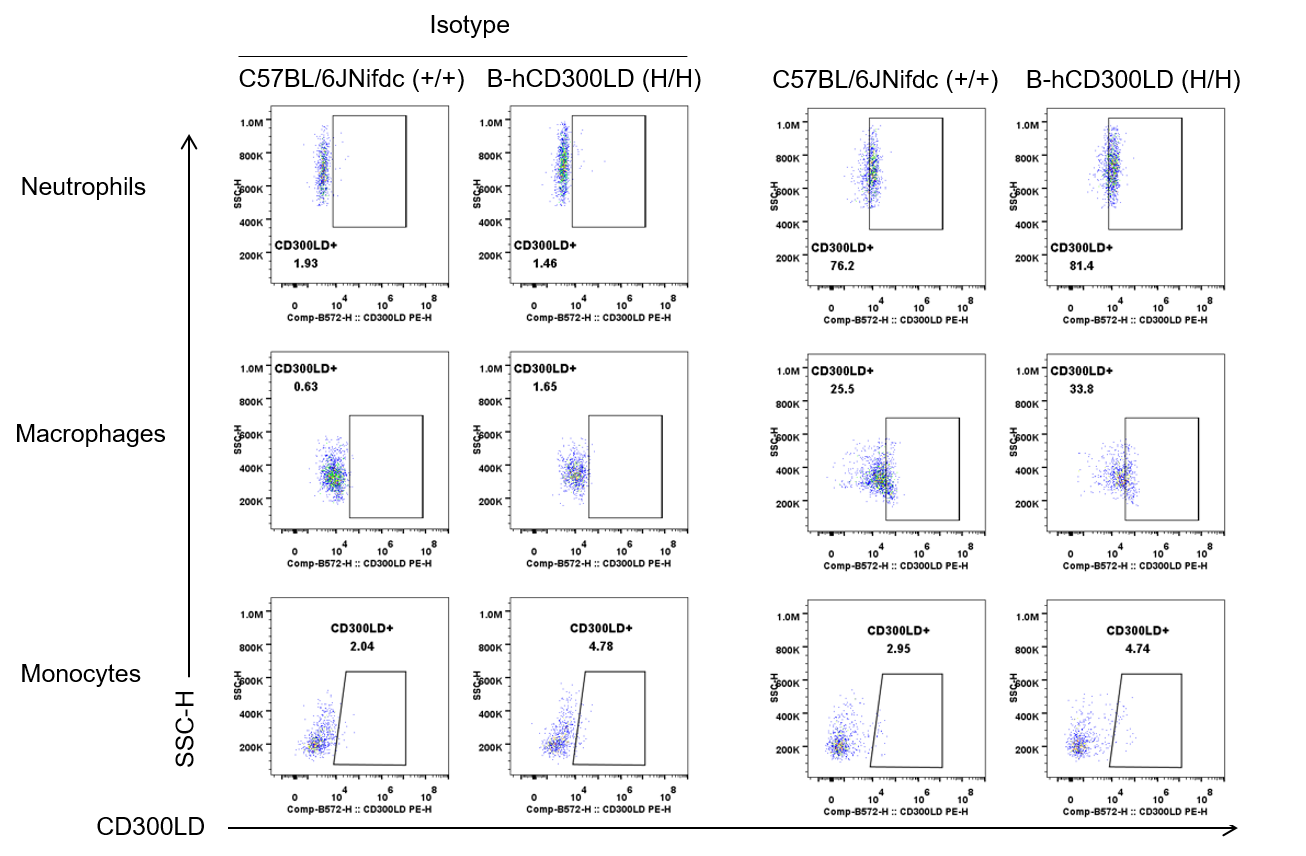
CD300LD expression analysis in homozygous B-hCD300LD mice by flow cytometry. Splenocytes were collected from wild-type C57BL/6JNifdc mice (+/+), homozygous B-hCD300LD mice (H/H), and analyzed by flow cytometry with CD300LD antibody(provided by a client, cross-reactive between human and mouse ).
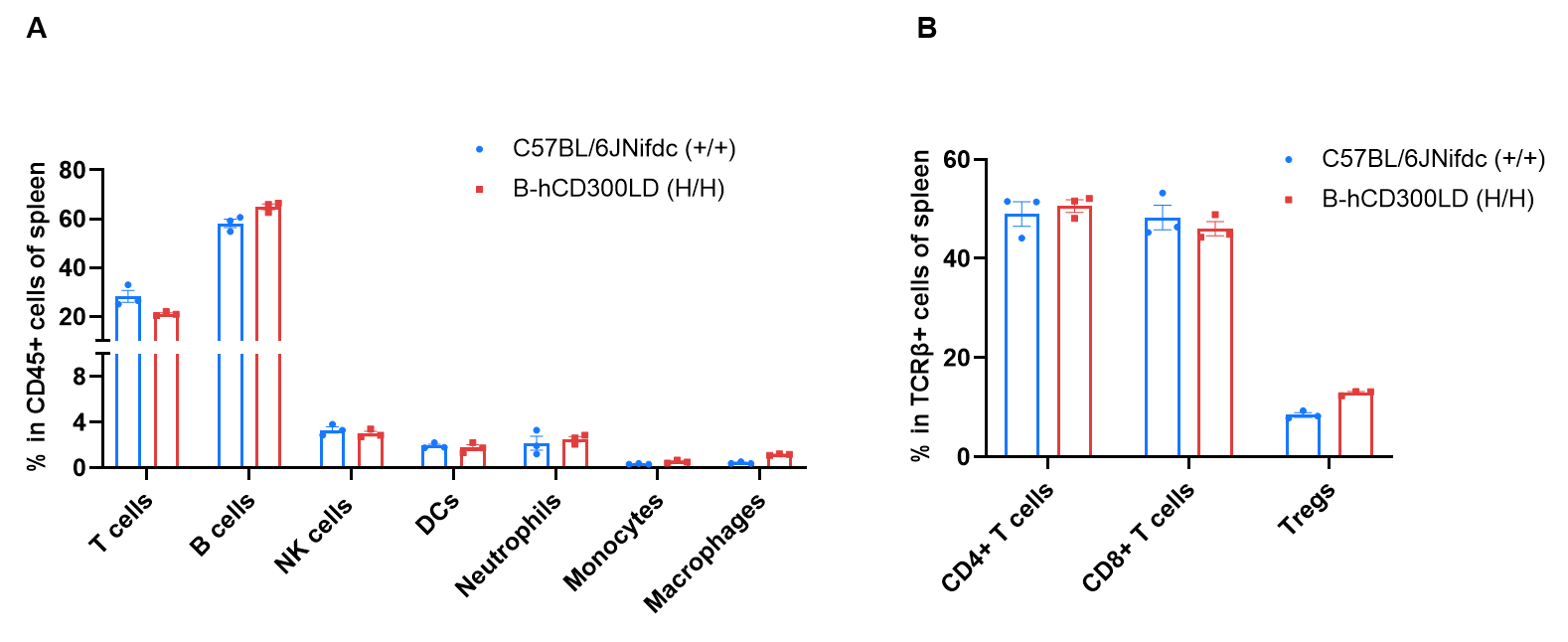
Frequency of leukocyte subpopulations in spleen by flow cytometry. Splenocytes were isolated from wild-type C57BL/6JNifdc mice (female, n=3, 8-week-old), homozygous B-hCD300LD mice (female, n=3, 8-week-old). A. Flow cytometry analysis of the splenocytes was performed to assess the frequency of leukocyte subpopulations. B. Frequency of T cell subpopulations. Percentages of T cells, B cells, NK cells, dendritic cells, neutrophils, monocytes, macrophages, CD4+ T cells, CD8+ T cells and Tregs in B-hCD300LD mice were similar to those in C57BL/6JNifdc. Values are expressed as mean ± SEM.
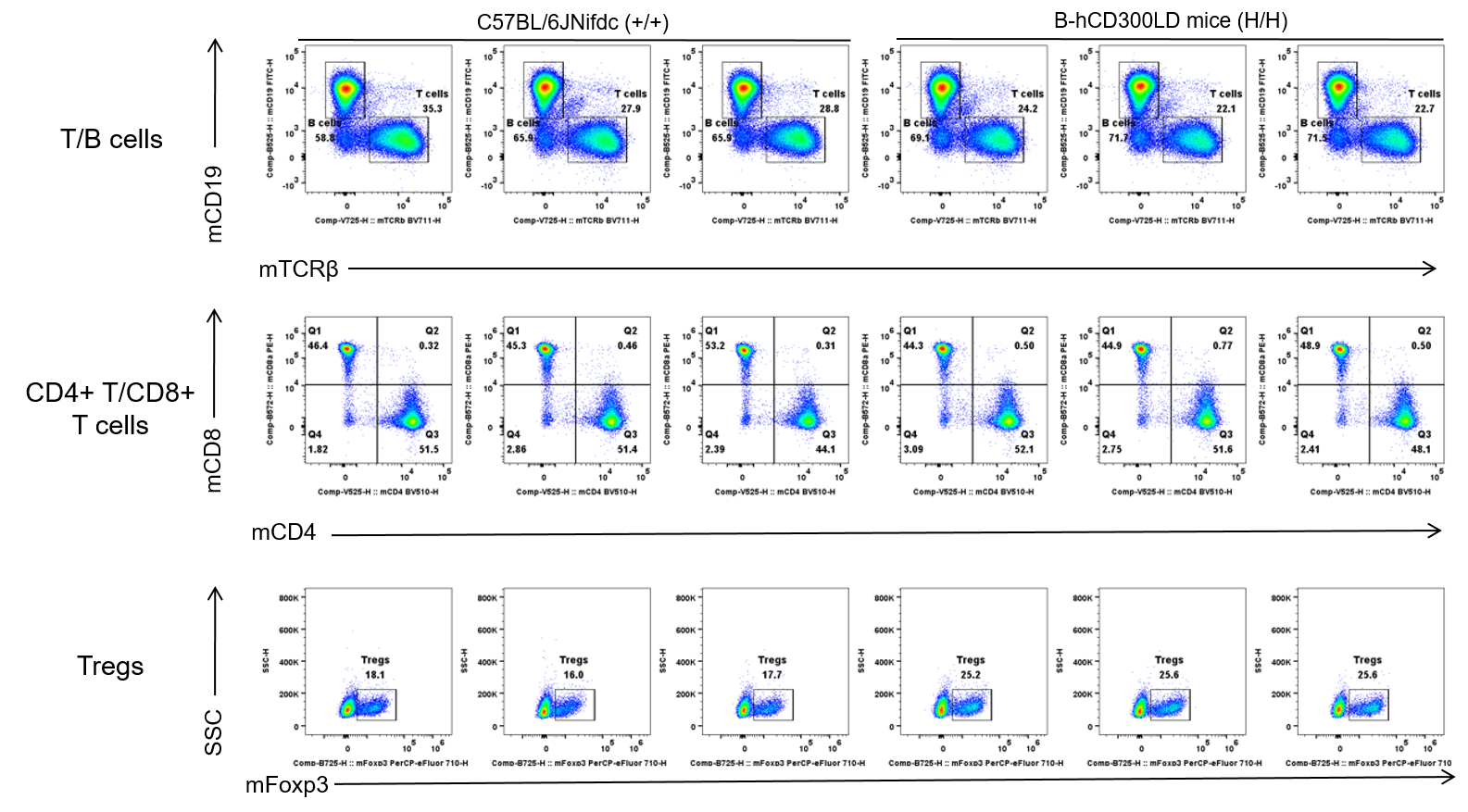
FACS plots of T cells, B cells, CD4+ T cells, CD8+ T cells and Tregs in spleen. Splenocytes were isolated from wild-type C57BL/6JNifdc mice (female, n=3, 8-week-old) and homozygous B-hCD300LD mice (female, n=3, 8-week-old).
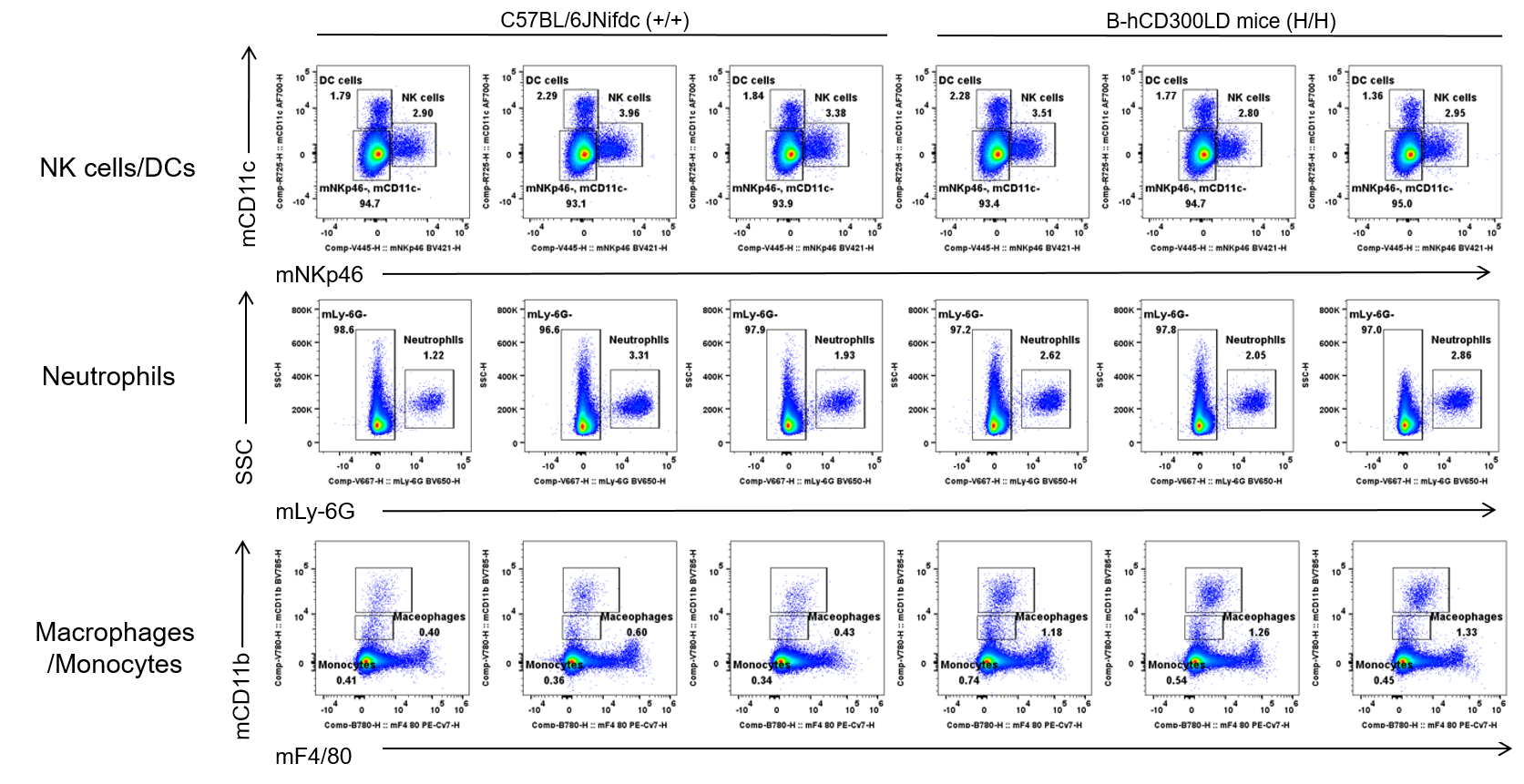
FACS plots of DCs, NK cells, neutrophils, macrophages and monocytes in spleen. Splenocytes were isolated from wild-type C57BL/6JNifdc mice (female, n=3, 8-week-old) and homozygous B-hCD300LD mice (female, n=3, 8-week-old).